 Sarpy County pays Federal Court judgment in favor of Deputy who alleged whistle-blower retailiation, $155k and his attorney $70K Omaha.com
Sarpy County has paid a $155,000 jury award to a deputy who won a lawsuit against the former sheriff. The county will not appeal the award to Sheriff's Deputy Mark Shiller, said Terri Weeks, the county's attorney.The county also paid court-ordered fees and costs of nearly $70,000 to Omaha attorney John Corrigan, who was Shiller's attorney for the case.
The payments bring to an end a dispute that boiled up two years ago after Shiller sent two letters to the Nebraska Attorney General's Office alleging misconduct in the Sheriff's Office.
Officials investigated Shiller's allegations, and Sarpy County Attorney Lee Polikov found no evidence that crimes had been committed.
On Sept. 30, however, jurors in U.S. District Court found that former Sarpy County Sheriff Pat Thomas retaliated against Shiller for sending the letters. Shiller alleged in court that Thomas had punished him more severely for wrecking a cruiser than other deputies would have been.
Jeff Davis, who in May replaced Thomas as sheriff, said this week that the case was "not pleasant for anybody in the department on either side, and we think it's time to move on."
"I have nothing against (Shiller) or anybody else involved in that ordeal," he said. "As long as he does his job, he's going to be fine."
Shiller still works for the department in the county jail.
Corrigan said important principles were at stake in the case, and he hopes the verdict will do some good for the department.
"The hope is that other employees can engage in protected activity with a free and open debate rather than be concerned about retribution," he said.
Sarpy County pays Federal Court judgment in favor of Deputy who alleged whistle-blower retailiation, $155k and his attorney $70K Omaha.com
Sarpy County has paid a $155,000 jury award to a deputy who won a lawsuit against the former sheriff. The county will not appeal the award to Sheriff's Deputy Mark Shiller, said Terri Weeks, the county's attorney.The county also paid court-ordered fees and costs of nearly $70,000 to Omaha attorney John Corrigan, who was Shiller's attorney for the case.
The payments bring to an end a dispute that boiled up two years ago after Shiller sent two letters to the Nebraska Attorney General's Office alleging misconduct in the Sheriff's Office.
Officials investigated Shiller's allegations, and Sarpy County Attorney Lee Polikov found no evidence that crimes had been committed.
On Sept. 30, however, jurors in U.S. District Court found that former Sarpy County Sheriff Pat Thomas retaliated against Shiller for sending the letters. Shiller alleged in court that Thomas had punished him more severely for wrecking a cruiser than other deputies would have been.
Jeff Davis, who in May replaced Thomas as sheriff, said this week that the case was "not pleasant for anybody in the department on either side, and we think it's time to move on."
"I have nothing against (Shiller) or anybody else involved in that ordeal," he said. "As long as he does his job, he's going to be fine."
Shiller still works for the department in the county jail.
Corrigan said important principles were at stake in the case, and he hopes the verdict will do some good for the department.
"The hope is that other employees can engage in protected activity with a free and open debate rather than be concerned about retribution," he said.
Thursday, December 01, 2005
Sarpy County pays Federal Court judgment in favor of Deputy who alleged whistle-blower retailiation, $155k and his attorney $70K Omaha.com
Sarpy County has paid a $155,000 jury award to a deputy who won a lawsuit against the former sheriff. The county will not appeal the award to Sheriff's Deputy Mark Shiller, said Terri Weeks, the county's attorney.The county also paid court-ordered fees and costs of nearly $70,000 to Omaha attorney John Corrigan, who was Shiller's attorney for the case.
The payments bring to an end a dispute that boiled up two years ago after Shiller sent two letters to the Nebraska Attorney General's Office alleging misconduct in the Sheriff's Office.
Officials investigated Shiller's allegations, and Sarpy County Attorney Lee Polikov found no evidence that crimes had been committed.
On Sept. 30, however, jurors in U.S. District Court found that former Sarpy County Sheriff Pat Thomas retaliated against Shiller for sending the letters. Shiller alleged in court that Thomas had punished him more severely for wrecking a cruiser than other deputies would have been.
Jeff Davis, who in May replaced Thomas as sheriff, said this week that the case was "not pleasant for anybody in the department on either side, and we think it's time to move on."
"I have nothing against (Shiller) or anybody else involved in that ordeal," he said. "As long as he does his job, he's going to be fine."
Shiller still works for the department in the county jail.
Corrigan said important principles were at stake in the case, and he hopes the verdict will do some good for the department.
"The hope is that other employees can engage in protected activity with a free and open debate rather than be concerned about retribution," he said.


 Follow up: Neighboring landowners who disputed Wal-Mart development in Papillion seek rehearing after Nebraska Supreme Court rejects their lawsuit against development; Their attorney claims the Papillion comprehensive plan is legislation that the City Council may not amend simply by resolutions Omaha.com Neighboring landowners have asked the Nebraska Supreme Court to reconsider its Nov. 10 decision allowing the project. Mike McClellan, an attorney for the neighbors, said the court's decision raises constitutional issues of due process and equal protection. Mike Schirber, the Papillion city attorney, concluded the neighbors' 25-page brief for rehearing raised no new issues.
As a result, he said, they declined to formally respond.
"Had we chosen to respond, we would have simply added about another 30 to 45 days to the process," Schirber said. "We didn't want to be a party to any further unnecessary delay."
If the court were to grant a rehearing, the matter would be scheduled on the next available docket, which is currently in February.
In their brief, neighbors challenge the court's conclusion that comprehensive development plans are administrative guides, not laws, that can be amended by resolution without the stricter public notice procedures to adopt an ordinance. Smith v City of Papillion.
That conclusion, neighbors say, conflicts with a 1979 ruling of the Nebraska Supreme Court that the Lincoln City Council's adoption of a comprehensive plan was a legislative act.
"They can't be right in 1979 and be right in 2005," McClellan said.
See Copple v. City of Lincoln, 202 Neb. 152, 158, 274 N.W.2d 520, 524 (1979) ("[t]he comprehensive plan, as adopted by the City of Lincoln, itself recognizes it is only to serve as a general guide in the development of Lincoln and Lancaster County. While the comprehensive plan specifically refers to the location of [one defendant's] property as a site for a regional multiuse shopping center, it does not necessarily follow that [the defendant's] property will, in fact, be developed as the regional shopping center").
The Papillion City Council passed a resolution last year to change the city's comprehensive plan and allow the shopping area at 72nd Street and Giles Road. It would contain a Wal-Mart Supercenter, Lowe's home improvement store and Kohl's department store.
Follow up: Neighboring landowners who disputed Wal-Mart development in Papillion seek rehearing after Nebraska Supreme Court rejects their lawsuit against development; Their attorney claims the Papillion comprehensive plan is legislation that the City Council may not amend simply by resolutions Omaha.com Neighboring landowners have asked the Nebraska Supreme Court to reconsider its Nov. 10 decision allowing the project. Mike McClellan, an attorney for the neighbors, said the court's decision raises constitutional issues of due process and equal protection. Mike Schirber, the Papillion city attorney, concluded the neighbors' 25-page brief for rehearing raised no new issues.
As a result, he said, they declined to formally respond.
"Had we chosen to respond, we would have simply added about another 30 to 45 days to the process," Schirber said. "We didn't want to be a party to any further unnecessary delay."
If the court were to grant a rehearing, the matter would be scheduled on the next available docket, which is currently in February.
In their brief, neighbors challenge the court's conclusion that comprehensive development plans are administrative guides, not laws, that can be amended by resolution without the stricter public notice procedures to adopt an ordinance. Smith v City of Papillion.
That conclusion, neighbors say, conflicts with a 1979 ruling of the Nebraska Supreme Court that the Lincoln City Council's adoption of a comprehensive plan was a legislative act.
"They can't be right in 1979 and be right in 2005," McClellan said.
See Copple v. City of Lincoln, 202 Neb. 152, 158, 274 N.W.2d 520, 524 (1979) ("[t]he comprehensive plan, as adopted by the City of Lincoln, itself recognizes it is only to serve as a general guide in the development of Lincoln and Lancaster County. While the comprehensive plan specifically refers to the location of [one defendant's] property as a site for a regional multiuse shopping center, it does not necessarily follow that [the defendant's] property will, in fact, be developed as the regional shopping center").
The Papillion City Council passed a resolution last year to change the city's comprehensive plan and allow the shopping area at 72nd Street and Giles Road. It would contain a Wal-Mart Supercenter, Lowe's home improvement store and Kohl's department store.
Wednesday, November 30, 2005

 SCOTUS allows ADEA Plaintiffs to pursue "disparate impact" claims; however Court will allow employers the easier to meet "reasonable factors other than age"defense from Wards Cove United States: Supreme Court Allows Disparate Impact Claims Under ADEA Vedder Price Law Firm Mondaq.com U.S. Supreme Court decided on March 30, 2005 that a claimant may establish liability under the federal Age Discrimination in Employment Act (ADEA) even if there is no intent to discriminate. Smith v. City of Jackson, Mississippi, No, 03-1160.
"Although Title VII has been construed to prohibit facially neutral employment policies that have a disparate impact on minorities and women, the federal courts have been divided on whether the ADEA permits these type of claims. In 1993, the Supreme Court held that an employee who was discharged shortly before his pension would have vested did not state a cause of action under the ADEA. Hazen Paper v Biggins. Many federal courts interpreted that decision as disapproving of disparate impact liability under the ADEA."
"The ADEA contains a provision not in Title VII which states that "any action otherwise prohibited [under ADEA]" is lawful "where the differentiation is based on reasonable factors other than age discrimination" (RFOA). The Court concluded that this provision could not be referring to intentional discrimination claims so it must be referring to disparate impact claims." 42 USC 2000-e-2(a)(2)and (k)
"the Court decided that an employer can justify a policy that has a disproportionate adverse effect on older employees by showing the policy is based on "reasonable" non-age factors...thus handing the ADEA disparate impact plaintiffs a "Pyrrhic victory."
SCOTUS allows ADEA Plaintiffs to pursue "disparate impact" claims; however Court will allow employers the easier to meet "reasonable factors other than age"defense from Wards Cove United States: Supreme Court Allows Disparate Impact Claims Under ADEA Vedder Price Law Firm Mondaq.com U.S. Supreme Court decided on March 30, 2005 that a claimant may establish liability under the federal Age Discrimination in Employment Act (ADEA) even if there is no intent to discriminate. Smith v. City of Jackson, Mississippi, No, 03-1160.
"Although Title VII has been construed to prohibit facially neutral employment policies that have a disparate impact on minorities and women, the federal courts have been divided on whether the ADEA permits these type of claims. In 1993, the Supreme Court held that an employee who was discharged shortly before his pension would have vested did not state a cause of action under the ADEA. Hazen Paper v Biggins. Many federal courts interpreted that decision as disapproving of disparate impact liability under the ADEA."
"The ADEA contains a provision not in Title VII which states that "any action otherwise prohibited [under ADEA]" is lawful "where the differentiation is based on reasonable factors other than age discrimination" (RFOA). The Court concluded that this provision could not be referring to intentional discrimination claims so it must be referring to disparate impact claims." 42 USC 2000-e-2(a)(2)and (k)
"the Court decided that an employer can justify a policy that has a disproportionate adverse effect on older employees by showing the policy is based on "reasonable" non-age factors...thus handing the ADEA disparate impact plaintiffs a "Pyrrhic victory."

Tuesday, November 29, 2005

 Michael Moore has inspired not just gun control activists: Lancaster County District Judge Karen Flowers acquits Malcom high school kid who wanted to stage a "Bowling for Columbine" attack on insanity groundsWORLD-HERALD A Malcolm, Neb., teenager, who authorities said planned a Columbine-style attack at his high school, was ruled not responsible by reason of insanity Tuesday. Lancaster County District Judge Karen Flowers ruled that Joshua Magee, now 18, could not distinguish between right and wrong due to mental illness when he drove a car with a trunk full of weapons to Malcolm High School on March 16, 2004.
During an August trial, a psychiatrist testified that Magee believed voices from God had ordered the attack, which he abandoned after opening the trunk of his car, which was loaded with homemade explosives and a bolt-action rifle.
He was arrested at school that day, dressed in a black trench coat and camouflage pants.
Magee was charged with attempted first-degree murder, use of a weapon to commit a felony and using explosives to commit a felony.
Magee, dressed in a blue jail jumpsuit, did not speak during the brief hearing today.
...
Magee's lawyer, Deputy Lancaster County Public Defender Scott Helvie, said the ruling was consistent with the expert testimony presented at the trial.
"All the doctors agreed, including the state's doctor, that he suffered from a major psychiatric disorder that caused him to be psychotic," Helvie said.
While a doctor called by the prosecution testified that Magee knew the consequences of his actions, the defense needed to prove only by the preponderance of the evidence that Magee was not responsible due to insanity.
Flowers ordered Magee to undergo an evaluation at the Lincoln Regional Center to determine if he is dangerous to himself or others and if he should be incarcerated there for the protection of himself and the public.
The evaluation must be completed within 90 days. Both the prosecution and defense can ask for additional evaluations.
Lancaster County Attorney Gary Lacey said the ruling was not a surprise. But he said his office would seek another examination if the Regional Center finds that Magee is not dangerous.
Court documents stated that Magee suffered from bipolar disorder. At school, he was the subject of taunts and called "Moss" by classmates; he also talked frequently of guns and the documentary film about the Columbine massacre, "Bowling for Columbine."
Michael Moore has inspired not just gun control activists: Lancaster County District Judge Karen Flowers acquits Malcom high school kid who wanted to stage a "Bowling for Columbine" attack on insanity groundsWORLD-HERALD A Malcolm, Neb., teenager, who authorities said planned a Columbine-style attack at his high school, was ruled not responsible by reason of insanity Tuesday. Lancaster County District Judge Karen Flowers ruled that Joshua Magee, now 18, could not distinguish between right and wrong due to mental illness when he drove a car with a trunk full of weapons to Malcolm High School on March 16, 2004.
During an August trial, a psychiatrist testified that Magee believed voices from God had ordered the attack, which he abandoned after opening the trunk of his car, which was loaded with homemade explosives and a bolt-action rifle.
He was arrested at school that day, dressed in a black trench coat and camouflage pants.
Magee was charged with attempted first-degree murder, use of a weapon to commit a felony and using explosives to commit a felony.
Magee, dressed in a blue jail jumpsuit, did not speak during the brief hearing today.
...
Magee's lawyer, Deputy Lancaster County Public Defender Scott Helvie, said the ruling was consistent with the expert testimony presented at the trial.
"All the doctors agreed, including the state's doctor, that he suffered from a major psychiatric disorder that caused him to be psychotic," Helvie said.
While a doctor called by the prosecution testified that Magee knew the consequences of his actions, the defense needed to prove only by the preponderance of the evidence that Magee was not responsible due to insanity.
Flowers ordered Magee to undergo an evaluation at the Lincoln Regional Center to determine if he is dangerous to himself or others and if he should be incarcerated there for the protection of himself and the public.
The evaluation must be completed within 90 days. Both the prosecution and defense can ask for additional evaluations.
Lancaster County Attorney Gary Lacey said the ruling was not a surprise. But he said his office would seek another examination if the Regional Center finds that Magee is not dangerous.
Court documents stated that Magee suffered from bipolar disorder. At school, he was the subject of taunts and called "Moss" by classmates; he also talked frequently of guns and the documentary film about the Columbine massacre, "Bowling for Columbine."
Douglas County prosecutors appeal sentence District Judge Spethman handed down for shooting into building, killing a child, where judge sentences defendant to prison time concurrent to an existing federal crack dealing sentence WORLD-HERALD Douglas County prosecutors on Monday appealed the sentence given to an Omaha man who killed a 4-month-old baby. County Attorney Stu Dornan said that his office will argue that Judge Richard Spethman was excessively lenient when he ordered Terron Brown to serve his prison term at the same time(concurrent to) a federal drug sentence.
In effect, Spethman's order meant that Brown will not serve any more time for killing Deandre Robinson Jr. than the 20 years he is serving for dealing crack cocaine. The sentence outraged the dead child's family - including his mother, Rolisha Easter - and prompted prosecutors to immediately promise an appeal.
"There were two separate crimes involved here," Dornan said. "We will be urging the appellate courts to impose a consecutive sentence."
Under state law, judges have wide discretion in sentencing matters. Spethman could have sentenced Brown, who pleaded guilty to second-degree murder, to anywhere from 20 years to life in prison for little Deandre's death.
Spethman sentenced Brown to 30 to 40 years in prison - which computes to 15 to 20 years. Under state law, defendants must serve half the lower term before they are eligible for parole and half the upper term before they are released.
To get Spethman's sentence overturned, prosecutors must show that the judge abused his discretion.
Dornan said prosecutors will argue that the sentence should have been stiffer - and it should have been served after the drug term.
Prosecutors have noted that the killing of Deandre Robinson Jr. had nothing to do with the drug trafficking that landed Brown in prison. Police said Brown targeted Deandre Robinson Sr. because the two men - and members of their rival gangs - had been involved in a fight at a high-school basketball game.
At sentencing, Spethman noted that Brown didn't mean to kill the child but still decried the loss of this "totally, completely beautiful, innocent child."
He called it "the worst case I've ever had."
The judge, who is retiring next month, actually had a somewhat similar case a couple of years ago.
In August 2002, Demetrius Nelson, 23, fired a shot into a crowd because he believed he had seen a rival gang member.
Nelson instead killed 2-year-old Curtavius "C.J." Boykins and hit a woman who was holding Boykins' hand at a birthday party.
Nelson was convicted of second-degree murder and weapon use. Spethman sentenced him to 32 to 37 years.
The cases had distinct differences, though:
• Nelson fired one shot into a crowd; Brown fired at least 11, at point-blank range, into the picture window of Deandre Robinson Sr.'s small house.
• Nelson told Boykins' family that he was sorry. And his attorney said Nelson was haunted by nightmares of the shooting. Brown, who had been charged in another murder until prosecutors dropped the case, expressed no remorse in court. Twice asked by Spethman if he wanted to speak, Brown said, "No, sir."
In addition, Nelson wasn't already serving time for another crime, so the judge could not combine the sentences for the separate crimes.
The appeal could take about a year.
Douglas County District Court Judge throws out expert testimony on plaintiff's repressed memories; Boys Town counsel James Martin Davis comments: "This is daytime talk-show science." WORLD-HERALD STAFF WRITER On Monday, Judge Sandra Dougherty ruled that Todd Rivers of Omaha could not present expert testimony that he had repressed memories of abuse while at Boys Town in the 1980's. She said Rivers' expert had not proved that such a diagnosis is scientifically valid. But even if repressed memories do exist, Dougherty said, she questions whether such a diagnosis applied to Rivers.
...Rivers said he didn't remember the incident until he "recovered" the memory in a dream in 2002 - nearly 20 years after the alleged abuse.
Dougherty is the first Nebraska judge and just the sixth judge nationally to rule on repressed memories, an issue that is critical to some of the claims of people alleging sexual abuse.
Otherwise barred by statutes of limitations, many sexual assault victims take one of two paths when they file claims years after alleged abuse. They say a disability, such as a mental illness, precluded them from taking action. Or they assert that they suffered from a repressed memory.
Of the five other rulings on the issue, two federal judges and a Louisiana judge have recognized repressed memory as an acceptable diagnosis. But two state courts have rejected the idea as unscientific. Massachusetts Federal Court: yes (Shahzade v. Gregory 1996) NewHampshire State Court: no (based on statutes regulating repressed memory evidence)
Dougherty joined the fray. But her decision might not be the final say.
U.S. District Judge Laurie Smith Camp of Nebraska is expected to decide the same issue after a hearing next month in another man's lawsuit against Kelly and Boys Town.
Rivers' attorney, Patrick Noaker of St. Paul, Minn., said Rivers was "very disappointed" in Dougherty's order.
"Todd knows what happened and he stands by (his account)," Noaker said. "He has made it very clear that we've got to make sure this decision doesn't deter others from coming forward and getting help."
James Martin Davis, an attorney for Girls and Boys Town, said he will ask Dougherty to dismiss Rivers' case, arguing that, without being able to claim a repressed memory, the statute of limitations has passed.
Davis said the judge was correct in scrutinizing the medical community's stance on whether the repressed memory notion is scientific or speculative.
"This is daytime talk-show science," Davis said. "It's not bona fide psychological or psychiatric theory."
Dougherty noted that the psychiatric community is sharply divided on whether repressed memory exists. Some doctors swear by it; others classify it as unsupported.
In her 25-page order, Dougherty detailed the views of psychiatric and medical groups. The American Medical Association, for example, "considers recovered memories of childhood sexual abuse to be of uncertain authenticity, which should be subject to external verification," she wrote.
The American Psychiatric Association, Dougherty noted, said that some abuse survivors' "coping mechanisms result in a lack of conscious awareness of the abuse for varying periods of time. . . . The only way to prove the accuracy of a recovered memory report is to produce corroborating evidence."
Noaker said Rivers has corroboration.
...But Dougherty noted that an investigator working on one of those students' cases called Rivers to question him about possible abuse. Only after that call, Dougherty said, did Rivers first tell his wife of his "recovered" memories.
The judge ruled that there was no evidence as to when Rivers repressed the alleged molestation. She noted that Rivers stopped going to confession after the incident.
"So it is clear that for some period of time Rivers remembered the incident," she wrote.
Even if Rivers' mind produced a buried memory, Dougherty questioned how anyone could attest to the veracity of his account.
"The fact that there is approximately 20 years between the alleged events and the 'recovered' memories increases the unreliability of the memory," she wrote.
Sunday, November 27, 2005
School Districts and retirement systems better beware of discriminating against older teachers and faculty: 8th Circuit finds that Des Moines' School early retirement plan violated ADEA because it arbitrarily denied some early retirement beneifts to those 65 years of age or older; the ADEA exemption for bona fide retirement plans did not save the systemBoone County Iowa News Republican
Early retirement plans have become a problem for school districts around Iowa after the 8th Circuit Court of Appeals held that age limitations on when a person can qualify for early retirement are illegal.
The current policy of Boone Schools states that to qualify for early retirement, a person must be between the ages of 55 and 62. Also, to qualify, they must meet the "rule of 74." This stipulates that the years of the employee's service when added with their age must equal 74. Seitz went on to explain that a recent court decision holds such requirements are illegal, even though 29 U.S.C. § 623(f)(2)(B)(ii) purports to exempt bona fide retirement plans from ADEA if they do not defeat the purpose of the Age Discrimination law.
In an Eighth Circuit Court of Appeals case, Jankovitz v. Des Moines Ind. Comm. School District, the 8th Circs decided that an early retirement plan that sets a maximum age for receipt of a monetary stipend violates the Age Discrimination Employment Act (ADEA).
Enacted in 1967, the ADEA makes it unlawful to discriminate against a person age 40 or older because of their age in respect to any term, condition or privilege of employment.
Therefore the Jankovitz case, decided on Aug. 29, accorded that it was discriminatory to bar anyone age 40 or older from being able to qualify for early retirement.
The salary of school teachers is based on seniority. A teacher in their 60s with 20 years of service under their belt is paid substantially more than a teacher fresh out of college with little experience. Early retirement has been a way of encouraging that highly paid, experienced teacher to choose to leave. If they did not, they would miss out on this incentive.
But now the law must allow more teachers - those age 40 to 55 - to participate in early retirement. That holding may make the program too expensive to continue.
Seitz says that there are boards that are completely doing away with early retirement for this reason.
Iowa law states that levy funds pay for early retirement for retirees between the ages of 55 and 65. Any retiree whose age falls outside that range has to be compensated through the general fund.
General fund money goes toward teachers' salaries, school supplies and so on. That budget is tight as it is.
If those funds must be used to pay for early retirement for a number of people, the staff may have to be reduced to foot the bill.
Currently, this concern is not bearing down on the Boone School with any kind of urgency since the district has no teachers over the age of 65. They have at least one more year to consider the issue before deciding it.
"They are not going to get hit with it, at least not immediately," Seitz said.
In Nebraska the State runs the school retirement plan for all districts except Omaha's. The Nebraska system employs a "rule of 85" for retirement and allows early retirement apparently though with out arbitrary age cutoffs that the Iowa districts employed.
 8th Circuit affirms 51 month sentence for pirated software defendant sold on Ebay; on Booker resentencing retail value of Ebay sales was $220K and counts for sentencing purposes USA v. Susel (8th Circuit, District of Minnesota)
Friday, November 25, 2005

 Nebraska Supreme Court CJ Hendry overrules Senate candidate and former Attorney General Stenberg's request to issue a temp.restraining order in School Merger Case; Presently Judge Merrit's temp injunction is in effect until end ofthis month when he promised a final ruling Associated Press -- The Nebraska Supreme Court refused Tuesday to enter the fight over a new law meant to force the small schools to merge with larger, K-12 districts. The court was replying to a request by former Attorney General Don Stenberg, lawyer for the small schools,. He wanted to ask the court for a temporary restraining order to block the law from taking effect Dec. 1.The order, signed by Chief Justice John Hendry, said the high court can't yet take jurisdiction in the case, which is still pending in Lancaster County District Court. Meanwhile, Lancaster County District Judge Paul Merritt Jr. listened Tuesday to arguments from lawyers on both sides of the issue, which many expect to eventually end up before the high court.
Merritt issued a temporary injunction in the case last week and is pondering whether to issue a permanent injunction blocking the law.
He said he would rule by Nov. 30 -- the day before the law takes effect.
State lawmakers passed a bill (LB126) last session requiring the elementary-only districts to merge with larger districts.
But supporters of the elementary-only, or Class I schools, circulated petitions and gathered enough signatures to ask voters to overturn the law in the November 2006 election.
The law requires the small districts to be dissolved in June, nearly five months before the vote.
In issuing the temporary injunction, Merritt said that, should the law be allowed to go into effect, the November 2006 vote would then "represent a meaningless exercise in futility."
Although lawyers for both sides raised other technical issues Tuesday, Merritt said at the end of the hearing that "nothing has really changed my mind" since his earlier decision.
Representing the small schools, Stenberg said he fears the state will use the courts to circumvent the vote.
Under state law, a temporary injunction cannot be appealed.
Stenberg said that if Merritt issues a permanent injunction, the attorney general's office plans to appeal the ruling to the Supreme Court, which would set aside the injunction while it considers the case. Sec 25-21,216 RRS. The State Committee for the Reorganization of School Districts would then move to dissolve the small schools, Stenberg said.
"So we have a race," Stenberg said Tuesday. "I don't think that's a good way to administer justice."
Chairman Kendall Moseley said his State Committee for the Reorganization of School Districts would also just be doing its job if Merritt grants the permanent injunction and it were appealed before Dec. 1 -- the date the law takes effect.
While enough signatures were gathered to put the question on the ballot, petition circulators fell about 26,000 short of the required total to have automatically suspended the law without legal action.
The attorney general's office argued that because petitioners had the ability to automatically suspend the law but failed to do so, the temporary injunction should not be granted.
There are 206 elementary-only schools in Nebraska, many of which are in the most rural parts of the state.
Supporters of the schools say they should be able to determine their own fates and not be forced to merge. Law proponents argue that having K-12 districts statewide will save money and provide a more equitable education to all students.
Nebraska Supreme Court CJ Hendry overrules Senate candidate and former Attorney General Stenberg's request to issue a temp.restraining order in School Merger Case; Presently Judge Merrit's temp injunction is in effect until end ofthis month when he promised a final ruling Associated Press -- The Nebraska Supreme Court refused Tuesday to enter the fight over a new law meant to force the small schools to merge with larger, K-12 districts. The court was replying to a request by former Attorney General Don Stenberg, lawyer for the small schools,. He wanted to ask the court for a temporary restraining order to block the law from taking effect Dec. 1.The order, signed by Chief Justice John Hendry, said the high court can't yet take jurisdiction in the case, which is still pending in Lancaster County District Court. Meanwhile, Lancaster County District Judge Paul Merritt Jr. listened Tuesday to arguments from lawyers on both sides of the issue, which many expect to eventually end up before the high court.
Merritt issued a temporary injunction in the case last week and is pondering whether to issue a permanent injunction blocking the law.
He said he would rule by Nov. 30 -- the day before the law takes effect.
State lawmakers passed a bill (LB126) last session requiring the elementary-only districts to merge with larger districts.
But supporters of the elementary-only, or Class I schools, circulated petitions and gathered enough signatures to ask voters to overturn the law in the November 2006 election.
The law requires the small districts to be dissolved in June, nearly five months before the vote.
In issuing the temporary injunction, Merritt said that, should the law be allowed to go into effect, the November 2006 vote would then "represent a meaningless exercise in futility."
Although lawyers for both sides raised other technical issues Tuesday, Merritt said at the end of the hearing that "nothing has really changed my mind" since his earlier decision.
Representing the small schools, Stenberg said he fears the state will use the courts to circumvent the vote.
Under state law, a temporary injunction cannot be appealed.
Stenberg said that if Merritt issues a permanent injunction, the attorney general's office plans to appeal the ruling to the Supreme Court, which would set aside the injunction while it considers the case. Sec 25-21,216 RRS. The State Committee for the Reorganization of School Districts would then move to dissolve the small schools, Stenberg said.
"So we have a race," Stenberg said Tuesday. "I don't think that's a good way to administer justice."
Chairman Kendall Moseley said his State Committee for the Reorganization of School Districts would also just be doing its job if Merritt grants the permanent injunction and it were appealed before Dec. 1 -- the date the law takes effect.
While enough signatures were gathered to put the question on the ballot, petition circulators fell about 26,000 short of the required total to have automatically suspended the law without legal action.
The attorney general's office argued that because petitioners had the ability to automatically suspend the law but failed to do so, the temporary injunction should not be granted.
There are 206 elementary-only schools in Nebraska, many of which are in the most rural parts of the state.
Supporters of the schools say they should be able to determine their own fates and not be forced to merge. Law proponents argue that having K-12 districts statewide will save money and provide a more equitable education to all students.
 Follow up: After Supreme Court sends back PolSub tort claim case for trial, Plaintiff wins $1 million from Omaha and of course that is not enough The Associated Press A woman who was struck by a pickup in 1999 as she traversed a mistimed Omaha crosswalk has won $1 million from the city. Georgett Tadros, 61, of Omaha was awarded the $1 million by Douglas County District Judge Gary Randall on Wednesday. In March, the Nebraska Supreme Court rejected an early ruling that held the city only 40 percent responsible for her extensive injuries.
Tadros should have gotten more, one of her attorneys said.
"If ever a case cried out for an examination of the tort case cap (of $1 million), this is the one," said attorney Matthew G. Miller on Wednesday. "Our client is completely and totally disabled. She is in constant and chronic pain."
City Attorney Paul Kratz said no decision has been made on whether the city will appeal.
Court documents say the crosswalk she was struck in had a pedestrian signal that took 11 seconds to change when, according to state standards, it should have taken 19.5 seconds to change for a pedestrian covering the 78 feet of roadway.
One car yielded to her as she sought to complete her crossing, but then she was struck by the pickup.
Judge Randall gave 50 percent of the accident blame to the city, 30 percent to the pickup driver and 20 percent to Tadros.
She and the pickup driver settled a lawsuit before it went to court.
Follow up: After Supreme Court sends back PolSub tort claim case for trial, Plaintiff wins $1 million from Omaha and of course that is not enough The Associated Press A woman who was struck by a pickup in 1999 as she traversed a mistimed Omaha crosswalk has won $1 million from the city. Georgett Tadros, 61, of Omaha was awarded the $1 million by Douglas County District Judge Gary Randall on Wednesday. In March, the Nebraska Supreme Court rejected an early ruling that held the city only 40 percent responsible for her extensive injuries.
Tadros should have gotten more, one of her attorneys said.
"If ever a case cried out for an examination of the tort case cap (of $1 million), this is the one," said attorney Matthew G. Miller on Wednesday. "Our client is completely and totally disabled. She is in constant and chronic pain."
City Attorney Paul Kratz said no decision has been made on whether the city will appeal.
Court documents say the crosswalk she was struck in had a pedestrian signal that took 11 seconds to change when, according to state standards, it should have taken 19.5 seconds to change for a pedestrian covering the 78 feet of roadway.
One car yielded to her as she sought to complete her crossing, but then she was struck by the pickup.
Judge Randall gave 50 percent of the accident blame to the city, 30 percent to the pickup driver and 20 percent to Tadros.
She and the pickup driver settled a lawsuit before it went to court.
"A rough record in a complicated divorce case sometimes means that "rough justice" is the best that can be done."; NebApp mostly upholds divorce marital property decree where husband and wife commingled personal accounts with childrens' trust accounts. Appeals court modfies decree to increase judgment husband owes for property settlement and his child supportHughes v. Hughes, 14 Neb. App. 229 November 22, 2005. No. A-04-939. Divorce involved sorting out marital property from separate gifted and inherited property. Also the the parties children inherited trust funds that the parents as custodians commingled with theirs. Mary Beth Hughes appeals the order of the Garfield County District Court, which dissolved her marriage to Gary Dean Hughes. The case is complicated by the fact that assets from Gary's deceased mother's trust have been improperly transferred and are now part of property which must be dealt with in this dissolution action, and the evidence does not allow accurate tracing of such trust assets.
Nebraska Court of appeals denies husband as separate property money he put into an investment property because he failed to prove how his investments in property increased its value. "proof merely that money was spent on real estate does not establish that the real estate's value has been enhanced. Gary did not prove his entitlement to a set-aside as nonmarital property for expenditures from Emma's trust on Trapper's Creek. "
The Wife claimed that Husband could not claim as his separate property funds placed into an investment account because funds came from children's accounts. further wife objected to the court's refusing to count her $25K life insurance proceeds. However the money was gone and the appeals court counted $25k anyway by how it calculated the husband's equalizing judgment in wife's favor.
Court noted that while it might be improper for the parents to move around the kids'money that is usually a matter for another day:
While it was possible for other persons or entities to have sought intervention in this action to assert claims against assets in the hands of Gary and Mary, no such relief was sought. See Yelkin v. Yelkin, 193 Neb. 789, 229 N.W.2d 59 (1975) (right of third parties to intervene in divorce proceedings is very limited, but may be permitted where it is necessary to procure justice for third persons whose property interest may be adversely affected in dissolution action). No potential claims of the various trusts and no claims of Jason and Kaycee are before us, and in any event, the record is inadequate to resolve any such claim. Compare Parker v. Parker, 1 Neb. App. 187, 492 N.W.2d 50 (1992) (district court erred in divorce action in attempting to mandate disposition of account under Nebraska Uniform Gifts to Minors Act, where parties' son was no longer minor).
Wednesday, November 23, 2005
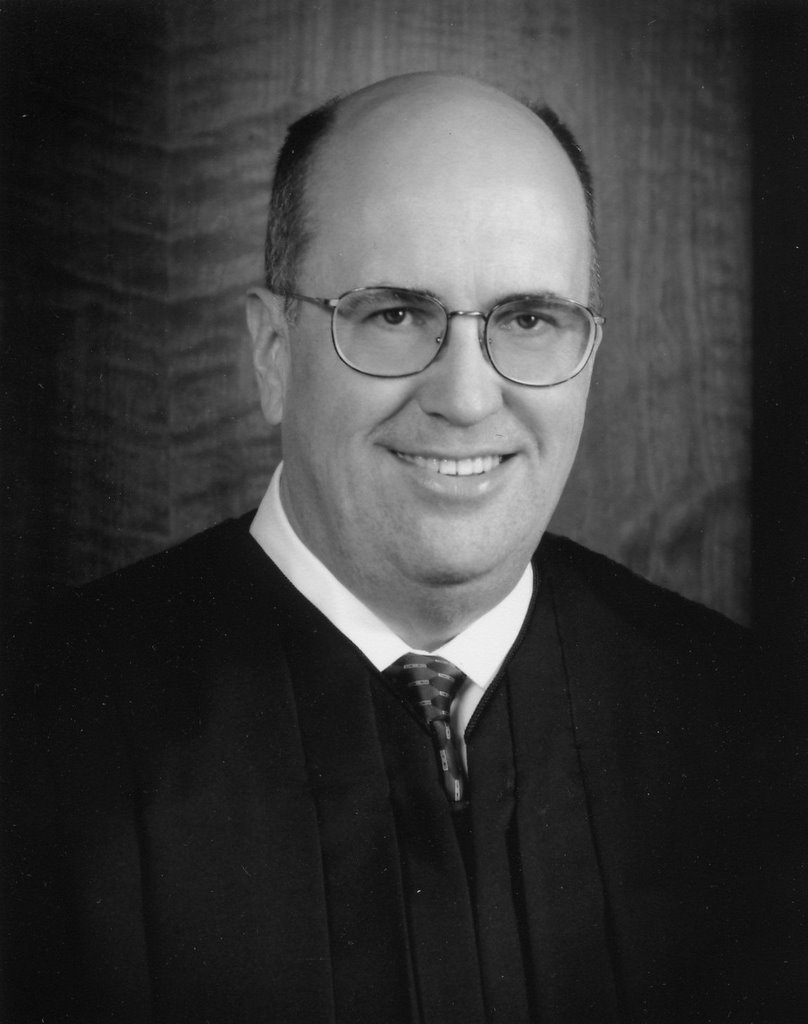
 NCA Judge Cassel upholds trespassing conviction ( § 28-520(1) RRS Neb) against divorced husband who was frequenting couple's home after trial court had awarded home to wife but case was on appeal; Court rejects Def. Husband's affirmative defense that he had an "ownership interest" in the property, further Court refuses to entertain plain error appeal that trial court used a "negligence" mens rea standard to convict husband of knowingly entering property State v. Anderson, 14 Neb. App. 253 November 22, 2005. No. A-04-1298. Larry Anderson appeals from an order of the district court which affirmed his county court conviction on the charge of trespassing in what was formerly his marital home. Regardless of whether Anderson had an ownership interest in the home, we conclude that the State adduced sufficient evidence to show that Anderson knowingly entered the home without license or privilege. We therefore affirm. Wife filed for divorce in 2000. Court in 2001 Temp. orders had given wife exclusive possession of home. The court awarded home to wife in 2002 decree. The county court hearing the trespass case also had evidence that there was a "bond" or some kind of protection order in place. On June 17, 2003 court of appeals reversed divorce decree. Husb was cited for entering property on JUly 7, 2003 (after NCA had reversed divorce but before any it would have issued a mandate to the Antelope County Court).
Def raises affirm. defense that he had an "ownership interest" in the property, especially since the court of appeals had reversed the divorce. NCA notes that this was not a specified affirmative defense under 28-520 ( § 28-522 RRs Neb). the court also noted that a "bond" prohibited def's entering the property.
" According to the evidence, at one point, a bond prohibited Anderson from being at the former marital home. Carol had the locks changed several times, and Anderson did not have a key. Carol testified that she would not have given Anderson a license or privilege to enter the home for any reason, and Anderson admitted that Carol had not given him permission to be in the house. Viewing the evidence in the light most favorable to the State, a rational trier of fact could have found beyond a reasonable doubt that Anderson entered the home knowing that he was not licensed or privileged to do so. "
Court will not recognize plain error where def sought on appeal to raise trial court's purported improper use of a negligence standard to convict def
Anderson argues that the county court erred in using a negligence standard, based upon that court's oral statement, "But I think the bottom line is that on July 7th, 2003 you knew or should have known based on all of the circumstances that you weren't authorized to be in that property." But " the argument that the county court erroneously applied a negligence standard was not assigned to or considered by the district court. " When the District court acts as the immediate appeals court the appeals court will not recognize errors that the District Court did not consider because the appellant did not raise it there. In re Estate of Trew, 244 Neb. 490, 498, 507 N.W.2d 478, 483 (1993)
Defendants sentence of probation and a suspended 90 day jail sentence affirmed
NCA Judge Cassel upholds trespassing conviction ( § 28-520(1) RRS Neb) against divorced husband who was frequenting couple's home after trial court had awarded home to wife but case was on appeal; Court rejects Def. Husband's affirmative defense that he had an "ownership interest" in the property, further Court refuses to entertain plain error appeal that trial court used a "negligence" mens rea standard to convict husband of knowingly entering property State v. Anderson, 14 Neb. App. 253 November 22, 2005. No. A-04-1298. Larry Anderson appeals from an order of the district court which affirmed his county court conviction on the charge of trespassing in what was formerly his marital home. Regardless of whether Anderson had an ownership interest in the home, we conclude that the State adduced sufficient evidence to show that Anderson knowingly entered the home without license or privilege. We therefore affirm. Wife filed for divorce in 2000. Court in 2001 Temp. orders had given wife exclusive possession of home. The court awarded home to wife in 2002 decree. The county court hearing the trespass case also had evidence that there was a "bond" or some kind of protection order in place. On June 17, 2003 court of appeals reversed divorce decree. Husb was cited for entering property on JUly 7, 2003 (after NCA had reversed divorce but before any it would have issued a mandate to the Antelope County Court).
Def raises affirm. defense that he had an "ownership interest" in the property, especially since the court of appeals had reversed the divorce. NCA notes that this was not a specified affirmative defense under 28-520 ( § 28-522 RRs Neb). the court also noted that a "bond" prohibited def's entering the property.
" According to the evidence, at one point, a bond prohibited Anderson from being at the former marital home. Carol had the locks changed several times, and Anderson did not have a key. Carol testified that she would not have given Anderson a license or privilege to enter the home for any reason, and Anderson admitted that Carol had not given him permission to be in the house. Viewing the evidence in the light most favorable to the State, a rational trier of fact could have found beyond a reasonable doubt that Anderson entered the home knowing that he was not licensed or privileged to do so. "
Court will not recognize plain error where def sought on appeal to raise trial court's purported improper use of a negligence standard to convict def
Anderson argues that the county court erred in using a negligence standard, based upon that court's oral statement, "But I think the bottom line is that on July 7th, 2003 you knew or should have known based on all of the circumstances that you weren't authorized to be in that property." But " the argument that the county court erroneously applied a negligence standard was not assigned to or considered by the district court. " When the District court acts as the immediate appeals court the appeals court will not recognize errors that the District Court did not consider because the appellant did not raise it there. In re Estate of Trew, 244 Neb. 490, 498, 507 N.W.2d 478, 483 (1993)
Defendants sentence of probation and a suspended 90 day jail sentence affirmed
Monday, November 21, 2005
 Is this Son of Lawrence or his boy-toy? Sioux Falls SD authorities charge teenage boy with "inappropriate activity between him and the mannequin." Sounds like a job for the American Snivel Liberties UnionDrudge Report Sioux Falls South Dakota law enforcement has charged a teenager with indecent exposure after they caught the boy trying to have sex with a female mannequin on display at an arts centre. Security guards found the boy, 18, sprawled with the dummy on the floor with his trousers and pants down. Police spokeswoman said: "There was inappropriate activity between him and the mannequin. "That's the only way I know how to put it."
Guards said they had noticed several times before that the dummy's clothes had been removed at the centre in Sioux Falls, South Dakota, US.
If convicted, the Defendant may be registered as a sex offender. A Prosecutors' spokeswoman said "People might say it's relatively harmless. But I certainly would want to know if this person was my neighbour."
Is this Son of Lawrence or his boy-toy? Sioux Falls SD authorities charge teenage boy with "inappropriate activity between him and the mannequin." Sounds like a job for the American Snivel Liberties UnionDrudge Report Sioux Falls South Dakota law enforcement has charged a teenager with indecent exposure after they caught the boy trying to have sex with a female mannequin on display at an arts centre. Security guards found the boy, 18, sprawled with the dummy on the floor with his trousers and pants down. Police spokeswoman said: "There was inappropriate activity between him and the mannequin. "That's the only way I know how to put it."
Guards said they had noticed several times before that the dummy's clothes had been removed at the centre in Sioux Falls, South Dakota, US.
If convicted, the Defendant may be registered as a sex offender. A Prosecutors' spokeswoman said "People might say it's relatively harmless. But I certainly would want to know if this person was my neighbour."
 Regency Homeowners' Association has sued resident Jeff Shrier for putting an asphalt roof on his subdivision home, in violation of Homeowners' restrictive covenant; Court of Appeals ruled in favor of another homeowner association earlier this fall on identical issue The Regency Homes Association is serious about shingles. Omaha.com The Regency Homes Association has sued homeowner Jeff Schrier for putting asphalt composite shingles on his house in Eastern Regency.
The association maintains in the lawsuit, filed last week in Douglas County District Court, that installing asphalt composite shingles violates the area's covenants - its rules and regulations.
The association amended the covenants in 2002. They state that as of that date, roof improvement projects should use "wood shakes or wood shingles, tile or slate, or other approved materials. Asphalt and woodruff products are specifically prohibited."
Schrier, a longtime owner of Omaha-area car dealerships, said that he never received the covenants after taking ownership of the house and that an association office staffer admitted having failed to send them to him.
According to the lawsuit, Schrier's parents deeded the house to their son in April 2005. He had lived there at least seven months before that, the lawsuit says. The roof work was done around December 2004, the lawsuit says, through an agreement made by Schrier and his father, Stanley.
Jeff Schrier said he had no desire to upset his neighbors. Nevertheless, he said, he is willing to go to trial over the matter because he was not informed.
The lawsuit says the association notified the Schriers of the problem in December 2004 and February 2005. The shingles have not been removed, despite "frequent and repeated demands," the lawsuit says.
Bruce Brodkey, an association attorney and board member, said the association seeks uniformity in roof materials to protect the neighborhood's property values. Values of homes in Regency start at $300,000, and many homes are worth far more. The subdivision is northwest of 96th and Pacific Streets.
The covenants were on file when the house was conveyed to Jeff Schrier, Brodkey said, and notice of the existence of such covenants is on title insurance documents. He said it is incumbent on a homeowner to familiarize himself with neighborhood covenants.
The association's board approved filing the lawsuit, he said. "It's nothing that we took lightly."
This year the Nebraska Court of Appeals upheld summary judgment in favor of the Windridge Estates subdivision against a resident, Victor Ajlouny, who had placed asphalt shingles on his roof, also contrary to that association's rules. See Hoff v. Ajlouny, 14 Neb. App. 23 September 20, 2005. No. A-04-204. The Court of Appeals found summary judgment proper where the Defendant had no evidence of prior acquiescence to coventant violations and further recording of the covenant established notice to the defendantof the restrictions on roofing materials the association would allow
Regency Homeowners' Association has sued resident Jeff Shrier for putting an asphalt roof on his subdivision home, in violation of Homeowners' restrictive covenant; Court of Appeals ruled in favor of another homeowner association earlier this fall on identical issue The Regency Homes Association is serious about shingles. Omaha.com The Regency Homes Association has sued homeowner Jeff Schrier for putting asphalt composite shingles on his house in Eastern Regency.
The association maintains in the lawsuit, filed last week in Douglas County District Court, that installing asphalt composite shingles violates the area's covenants - its rules and regulations.
The association amended the covenants in 2002. They state that as of that date, roof improvement projects should use "wood shakes or wood shingles, tile or slate, or other approved materials. Asphalt and woodruff products are specifically prohibited."
Schrier, a longtime owner of Omaha-area car dealerships, said that he never received the covenants after taking ownership of the house and that an association office staffer admitted having failed to send them to him.
According to the lawsuit, Schrier's parents deeded the house to their son in April 2005. He had lived there at least seven months before that, the lawsuit says. The roof work was done around December 2004, the lawsuit says, through an agreement made by Schrier and his father, Stanley.
Jeff Schrier said he had no desire to upset his neighbors. Nevertheless, he said, he is willing to go to trial over the matter because he was not informed.
The lawsuit says the association notified the Schriers of the problem in December 2004 and February 2005. The shingles have not been removed, despite "frequent and repeated demands," the lawsuit says.
Bruce Brodkey, an association attorney and board member, said the association seeks uniformity in roof materials to protect the neighborhood's property values. Values of homes in Regency start at $300,000, and many homes are worth far more. The subdivision is northwest of 96th and Pacific Streets.
The covenants were on file when the house was conveyed to Jeff Schrier, Brodkey said, and notice of the existence of such covenants is on title insurance documents. He said it is incumbent on a homeowner to familiarize himself with neighborhood covenants.
The association's board approved filing the lawsuit, he said. "It's nothing that we took lightly."
This year the Nebraska Court of Appeals upheld summary judgment in favor of the Windridge Estates subdivision against a resident, Victor Ajlouny, who had placed asphalt shingles on his roof, also contrary to that association's rules. See Hoff v. Ajlouny, 14 Neb. App. 23 September 20, 2005. No. A-04-204. The Court of Appeals found summary judgment proper where the Defendant had no evidence of prior acquiescence to coventant violations and further recording of the covenant established notice to the defendantof the restrictions on roofing materials the association would allow
 USA Patriot Act to require Insurance Companies to report suspicious activities regarding cash value type insurance products; United States: New Anti-Money Laundering Requirements For Insurance Companies sutherland Asbill Brennan. The government is basically requiring the Insurance Industry to report suspicious uses of insurance products that have cash or surrender value. In other words if a customer is buying large amounts of non-term life insurance he might be laundering money or preparing a terrorist act. Whats a suspicious indicator: purchasing life insurance products that dont make sense for the customer. Hope that doesnt snare a lot of gullible life insurance customers who bought from salesmen out for the high commissions from whole life. Query: apparently the Justice Department does not think property/casualty insurance transactions pose enough risk for coverage; havent they heard about all the staged accidents and vehicle thefts some immigrant groups pull off?

 SCOTUS takes up whether unpaid worker compensation premiums are a priority debt against the debtors' estates, See 11 USC 507(a)(4); 4th circuit recently ruled premiums were priority debts, while in 1995 8th Circuit held they were not priority debtsUnited States: Bankruptcy: Priorities - Claim for Unpaid Workers’ Compensation Insurance Premiums (Supreme Court Docket Report – November 7, 2005)Mayer Brown & Platt Recently, the Supreme Court granted certiorari in one case of interest to the business community. Amicus briefs in support of the petitioner will be due on December 22, 2005, and amicus briefs in support of the respondent will be due on January 26, 2006. The case is Howard Delivery Service, Inc. v. Zurich American Insurance Co., No. 05-128 from the 4th Circuit. 8th Circuit case fromMinnesota in 1995 reached opposite conclusion: worker comp premiums are not priority debts, Employers Insurance of Wausau v HLM (In re HLM). For such a critical issue, the Congress apparently did not address the issue in the 2005 Bankruptcy Reform Act, because it did not amend directly 507(a) Mayer Brown Platt comments: "The Supreme Court’s decision in this case will obviously be of great interest to all insurance companies that provide workers’ compensation policies to employers, as the decision will establish whether priority under Section 507(a)(4) will be given to claims for unpaid workers’ compensation premiums. More generally this case is important to the business community at large, as it will affect the priority given to all unsecured debts of employers."
Friday, November 18, 2005
 The "sadder" the case, the better chance you have for paperSarpy County District Judge Zastera lets former OPS elementary school teacher- meth user and her husband get paper for possession even though police had ample evidence of constant drug activity around their home. Omaha.com A judge sentenced a former Omaha schoolteacher to probation today, calling her meth-related case "one of the saddest cases I've ever seen." Sarpy County District Judge William Zastera sentenced Lynn Weibel, 45, of Bellevue to two years probation for misdemeanor attempted possession of a controlled substance. Zastera also sentenced her husband, Michael Weibel, 49, of Bellevue to 30 months probation for the more serious felony charge of attempted possession of a controlled substance with the intent to deliver. Weibel was a fourth-grade teacher at Wakonda Elementary School in north Omaha. She resigned after her arrest in June, said Luanne Nelson, school district spokeswoman.
Just last Spring, police arrested an Omaha magnet school teacher also dealing drugs, she "needed the money." So thats why OPS needs to merge districts, to dilute their sad underpaid pool of educator talent?
The "sadder" the case, the better chance you have for paperSarpy County District Judge Zastera lets former OPS elementary school teacher- meth user and her husband get paper for possession even though police had ample evidence of constant drug activity around their home. Omaha.com A judge sentenced a former Omaha schoolteacher to probation today, calling her meth-related case "one of the saddest cases I've ever seen." Sarpy County District Judge William Zastera sentenced Lynn Weibel, 45, of Bellevue to two years probation for misdemeanor attempted possession of a controlled substance. Zastera also sentenced her husband, Michael Weibel, 49, of Bellevue to 30 months probation for the more serious felony charge of attempted possession of a controlled substance with the intent to deliver. Weibel was a fourth-grade teacher at Wakonda Elementary School in north Omaha. She resigned after her arrest in June, said Luanne Nelson, school district spokeswoman.
Just last Spring, police arrested an Omaha magnet school teacher also dealing drugs, she "needed the money." So thats why OPS needs to merge districts, to dilute their sad underpaid pool of educator talent?
 No opinions from the Nebraska Supreme Court today. Follow up: Douglas County Court Judge Swartz rejects discovery requests for computer operating codes for DWI testing equipment, avoiding "chaos" in the County Courts; no doubt this is the kind of case the Supremes like to get for the limelight. Omaha.comProsecutors can breathe easier: A Douglas County judge refused Thursday to throw out the breath tests against three drunken-driving suspects, ruling that prosecutors don't have to turn over the computer codes that make the breath-test devices tick. Judge Stephen Swartz's decision preserves the breath tests and the drunken-driving cases against the three men. More important, City Prosecutor Marty Conboy said, it reinforces police officers' use of the devices in arresting people they suspect of driving drunk. "It means business as usual," Conboy said.
A decision to toss the breath-test results could have thrown the courts into chaos - and hundreds of drunken-driving cases into a year or more of legal limbo. Prosecutors rely on the breath tests as their primary evidence against 5,000 drunken drivers a year in Douglas County and about 14,000 in the state.
The tests came into question last month when Omaha defense attorney Steve Lefler, following a Florida trend, requested access to the breath-test device's source codes, saying he needed them to ensure the machines' accuracy. A few judges in Florida have thrown out hundreds of breath tests after prosecutors there refused to turn over the source codes.
Judge Swartz agreed, ruling that, under state and federal law, he couldn't order prosecutors to turn over information they don't have.
a training specialist with the Department of Motor Vehicles, noted that there never has been any evidence - studies, reviews, trends - to suggest that the machines are skewing results.
In fact, Koperski said, it's quite the opposite: Agencies test the machines either weekly or monthly and are required to record the results. If the machine is slightly off, it is taken out of service and repaired.
Further, the state tests the machines every six months by sending agencies a solution with an alcoholic content known only by the state. If the machine misses that mark, it must be repaired.
No opinions from the Nebraska Supreme Court today. Follow up: Douglas County Court Judge Swartz rejects discovery requests for computer operating codes for DWI testing equipment, avoiding "chaos" in the County Courts; no doubt this is the kind of case the Supremes like to get for the limelight. Omaha.comProsecutors can breathe easier: A Douglas County judge refused Thursday to throw out the breath tests against three drunken-driving suspects, ruling that prosecutors don't have to turn over the computer codes that make the breath-test devices tick. Judge Stephen Swartz's decision preserves the breath tests and the drunken-driving cases against the three men. More important, City Prosecutor Marty Conboy said, it reinforces police officers' use of the devices in arresting people they suspect of driving drunk. "It means business as usual," Conboy said.
A decision to toss the breath-test results could have thrown the courts into chaos - and hundreds of drunken-driving cases into a year or more of legal limbo. Prosecutors rely on the breath tests as their primary evidence against 5,000 drunken drivers a year in Douglas County and about 14,000 in the state.
The tests came into question last month when Omaha defense attorney Steve Lefler, following a Florida trend, requested access to the breath-test device's source codes, saying he needed them to ensure the machines' accuracy. A few judges in Florida have thrown out hundreds of breath tests after prosecutors there refused to turn over the source codes.
Judge Swartz agreed, ruling that, under state and federal law, he couldn't order prosecutors to turn over information they don't have.
a training specialist with the Department of Motor Vehicles, noted that there never has been any evidence - studies, reviews, trends - to suggest that the machines are skewing results.
In fact, Koperski said, it's quite the opposite: Agencies test the machines either weekly or monthly and are required to record the results. If the machine is slightly off, it is taken out of service and repaired.
Further, the state tests the machines every six months by sending agencies a solution with an alcoholic content known only by the state. If the machine misses that mark, it must be repaired.
Subscribe to:
Posts (Atom)